
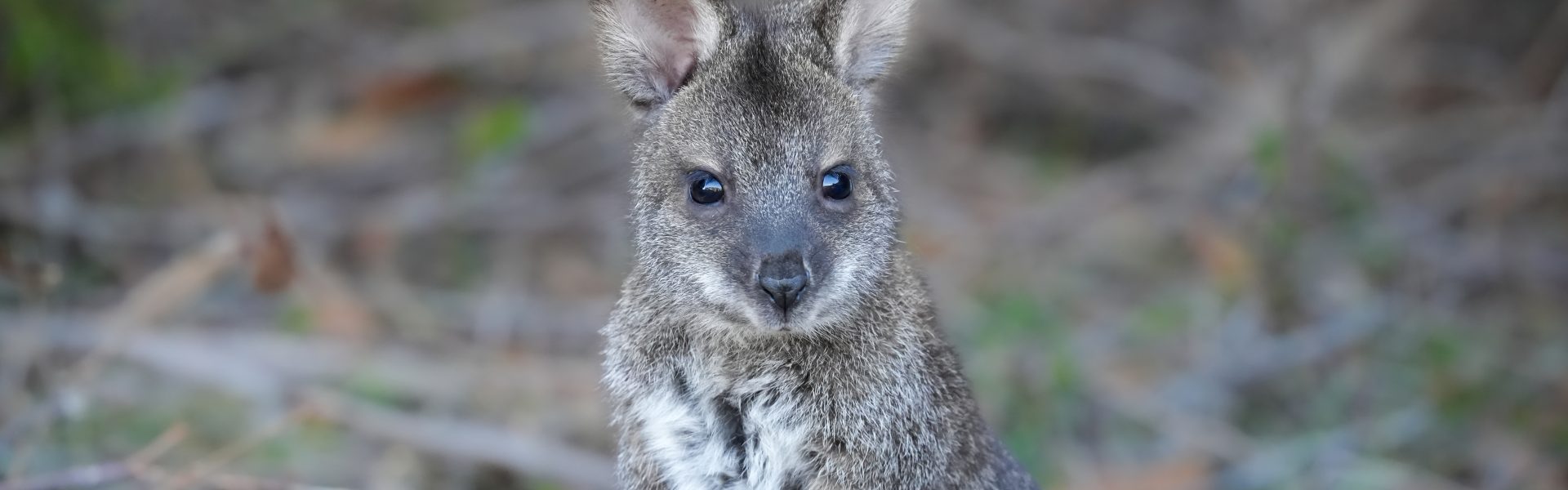
Correctly identifying wildlife from camera images can be challenging but, as with most things, becomes easier with practice. Start with the animal’s physical shape, colour and size. With experience, though, you’ll learn how to use a range of other cues to recognise the species in question.
What colour is the animal?
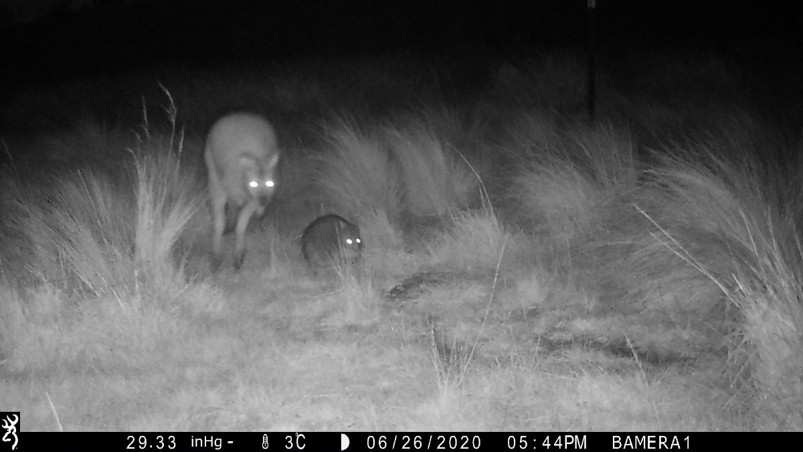
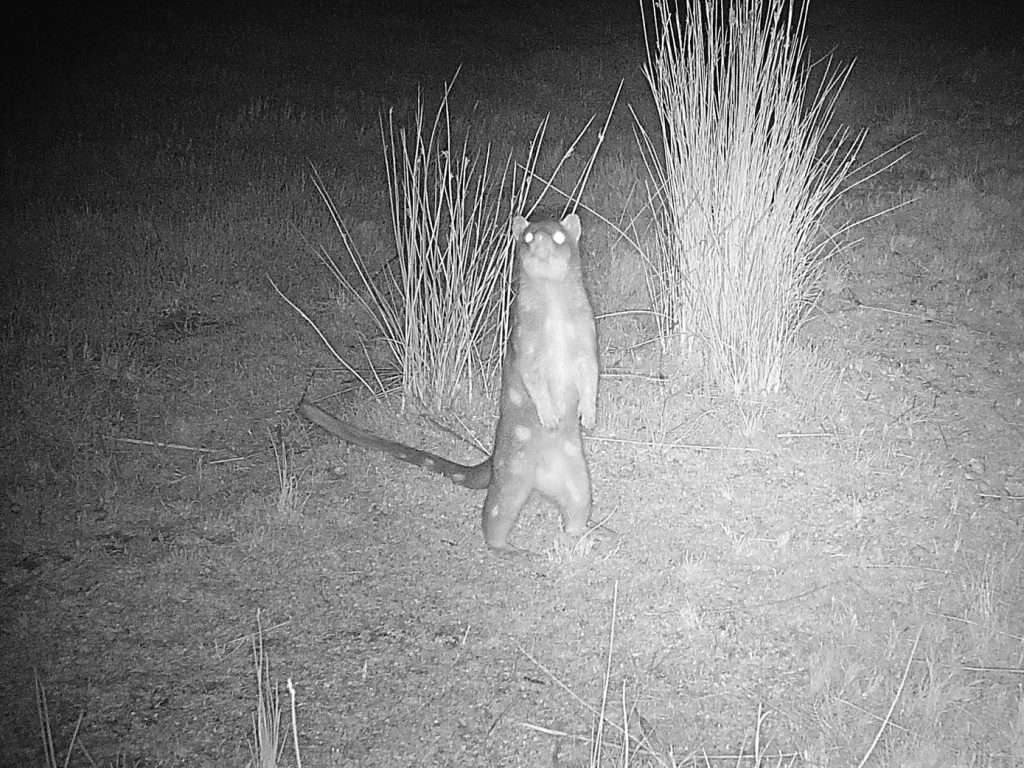
Most images you collect will be taken at night using infra-red, which can make identification tricky as animals will appear as various shades of grey. Shading can be useful, though. For example, a distinguishing feature of the Bennett’s wallaby is a dark stripe down its face and black paws. While these tones can help, don’t rely on them alone. The flash from camera traps can be misleading, with animals close to the centre of the flash often appearing brighter than animals of the same species further away. Overexposed images can also obscure key features, for example, the spots on a quoll mightn’t always be visible.
The texture of an animal’s fur can also sometimes be picked up through shading. Some species appear “grizzled”, such as southern brown bandicoots and brown hares, because the colour of their hairs changes along their length. Patchiness in coat colour can also give clues about fur density. For example, pademelons often look like they have a thick coat, rippling as they move, sometimes with missing patches from fighting or from the odd cheeky bird pulling fur to line their nests.
How big is the animal?
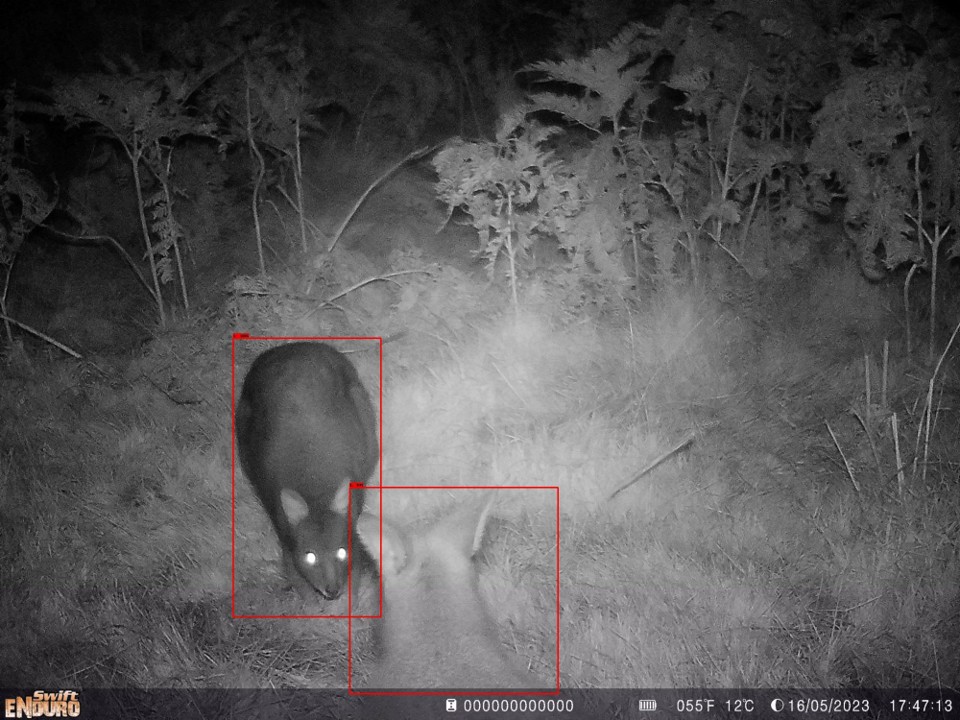
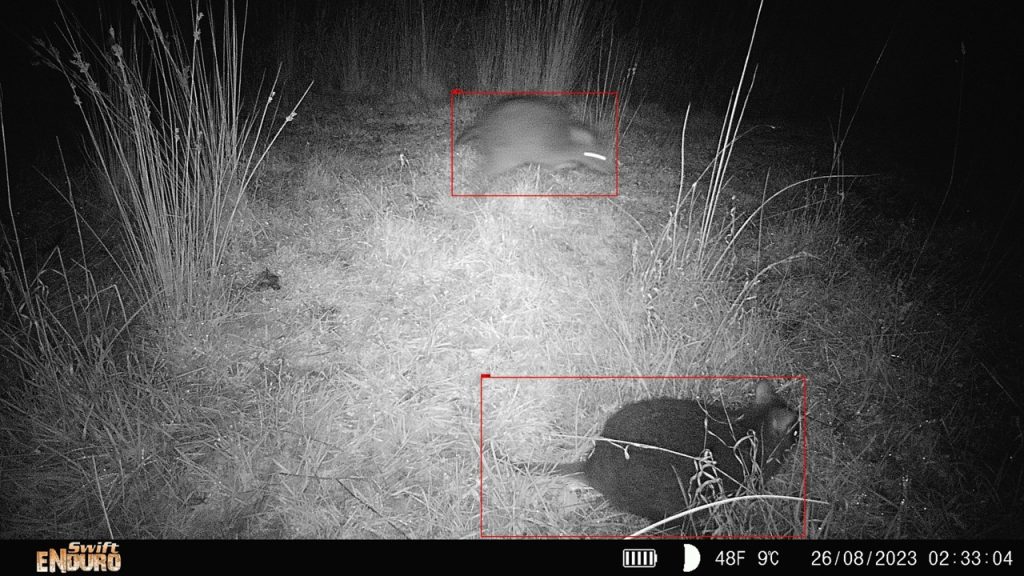
Still images taken at night can make it difficult to judge an animal’s size; a pademelon close up could be confused for a Bennett’s wallaby (if we didn’t have those shades of grey). Size is best judged by comparing animals to other photos from the same survey and location. Remember that Stickybeak has no sense of size, so a mouse might be equivalent to a devil that is far from the camera in its “eyes”.
What shape is the animal?
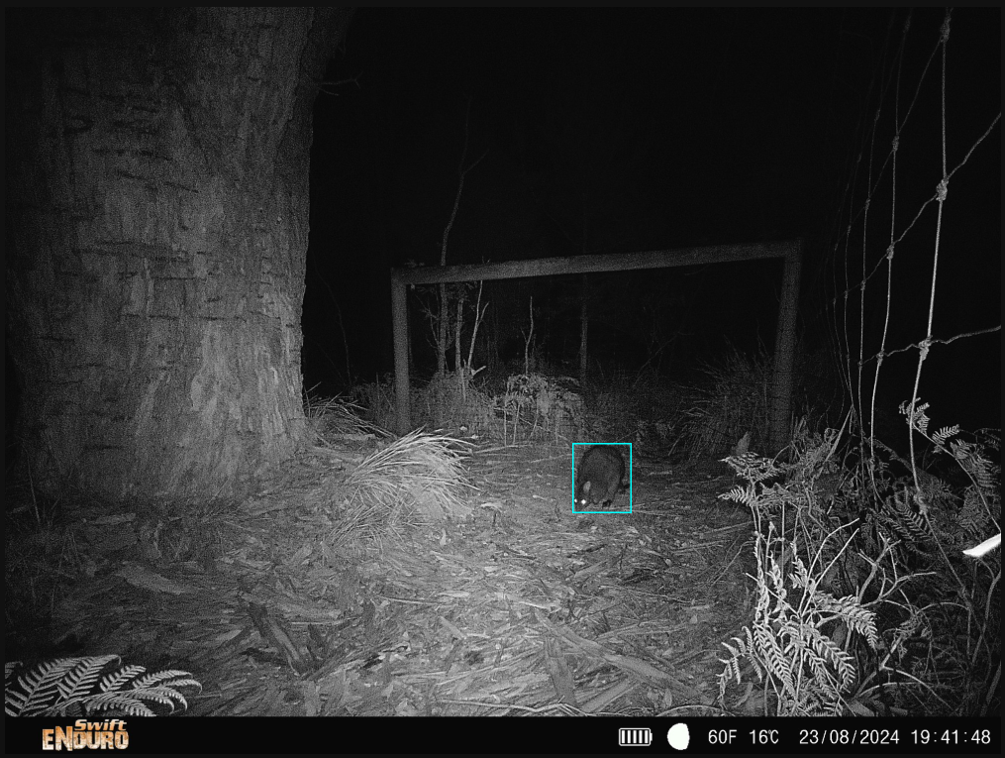
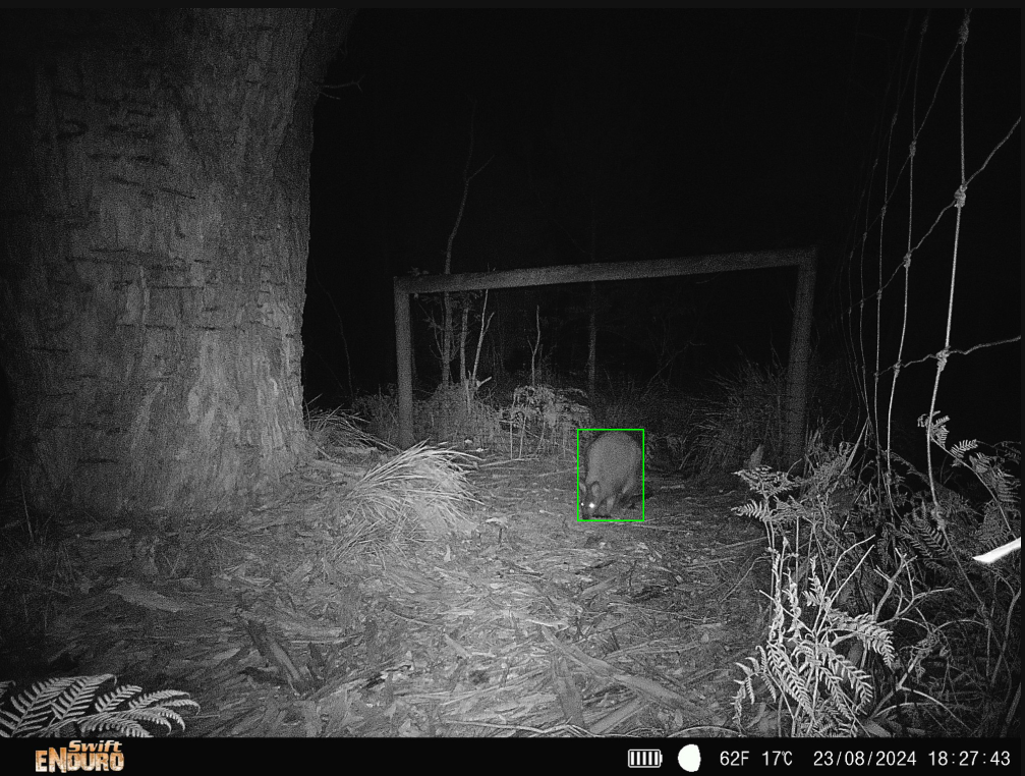
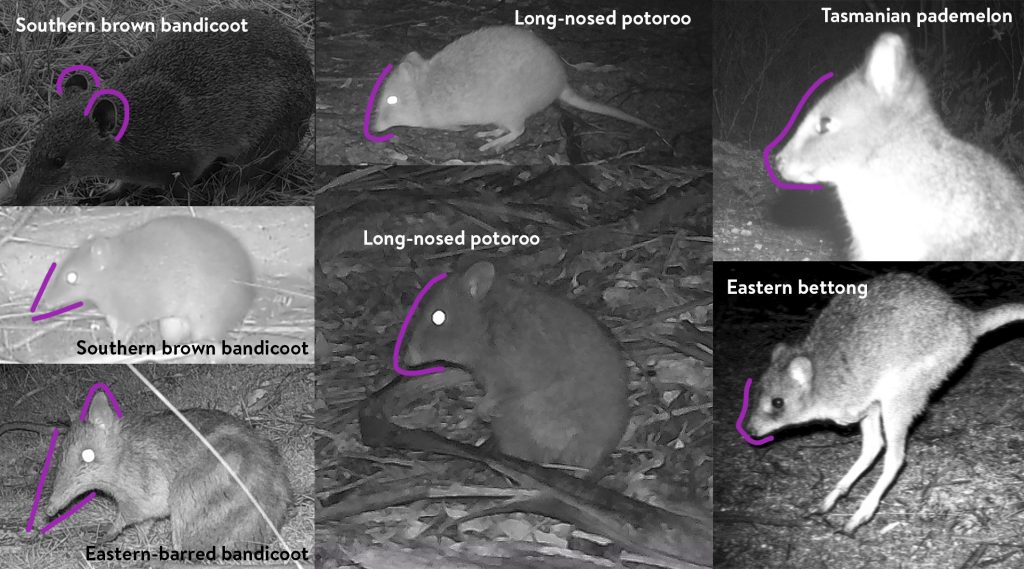
Focus on some key parts. The ears: are they large or small, pointed or rounded, positioned high on top of the head or more to the side? The tail: is it longer or shorter than the body length, is it thin or thick, or does it taper down? The muzzle or “nose”: is it symmetrical, pointed, square, broad or more delicate? The body: is it long and tubular or squat and round? The legs: how tall is the animal, is there much space between its belly and the ground?
Where does the data come from?
Some animals are more commonly found in particular habitats. Spotted-tailed quolls are more likely to be recorded in dense forest than eastern quolls which prefer open grassy areas and woodlands. Invasive rodents tend to occur closer to human infrastructure than native small mammals. However, these patterns aren’t fixed. Some invasive species, such as fallow deer and superb lyrebirds, are actively expanding their range in Tasmania, making records outside their usual distribution especially valuable. Location can provide useful clues, but shouldn’t be relied on alone. Animals can and do appear in unexpected places.
When was the photo captured?
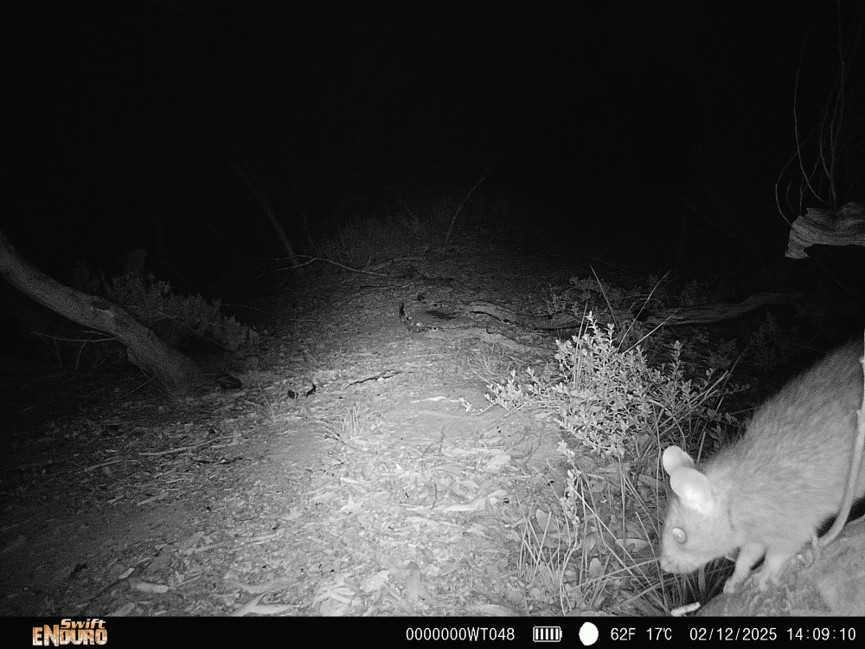
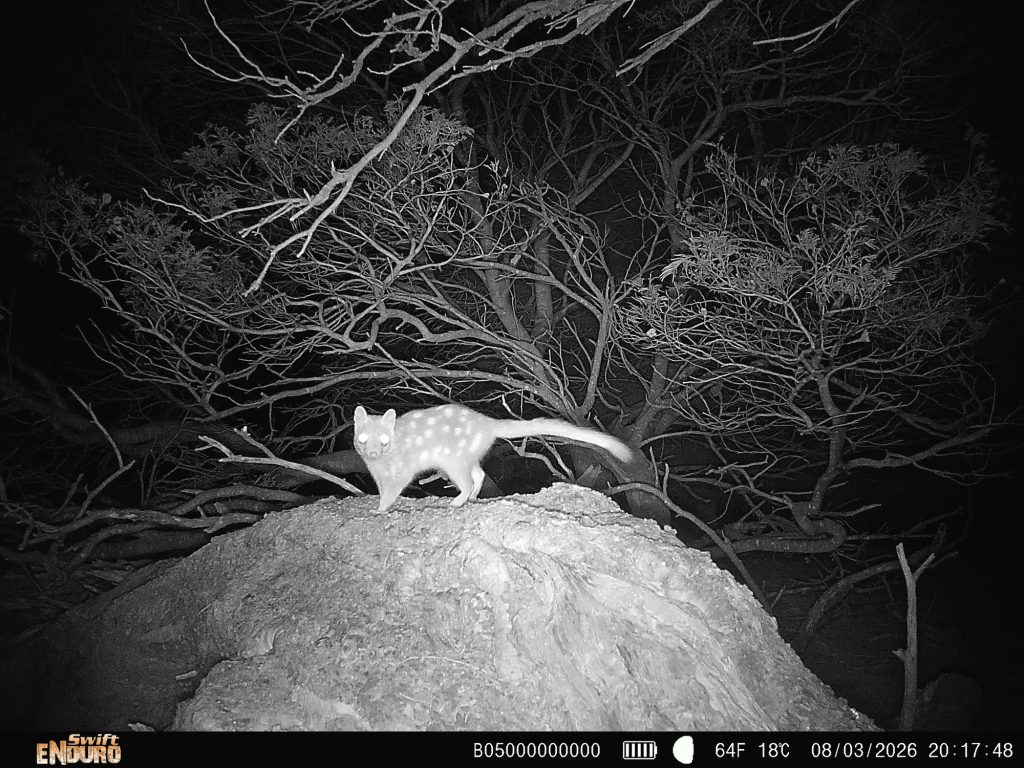
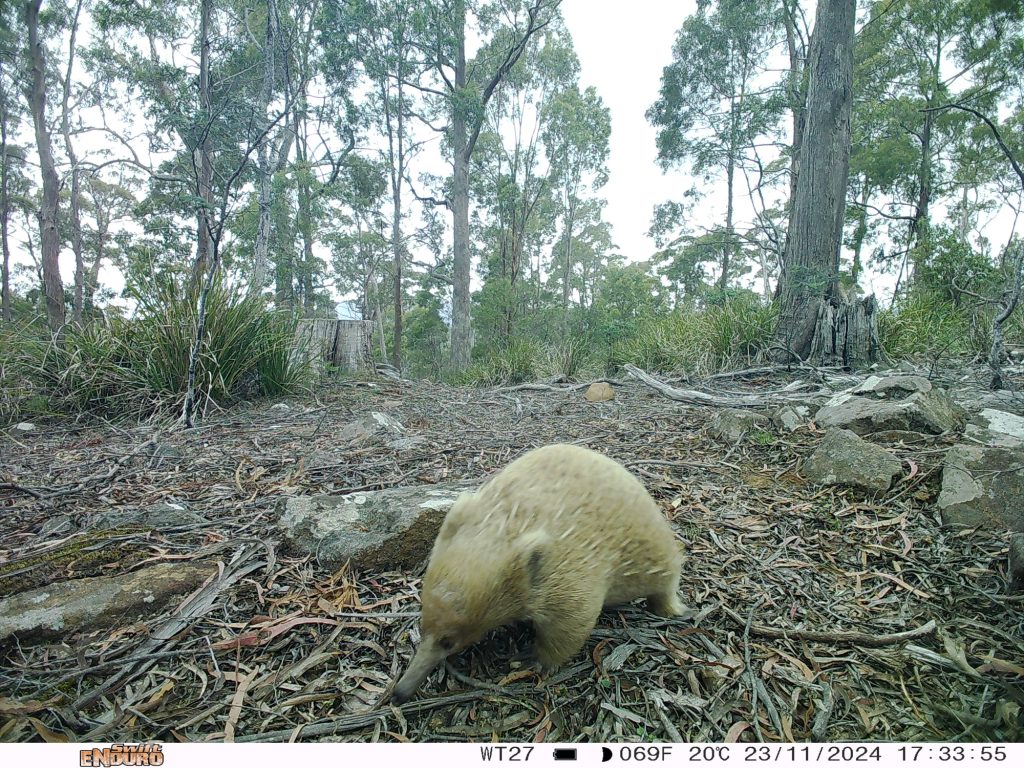
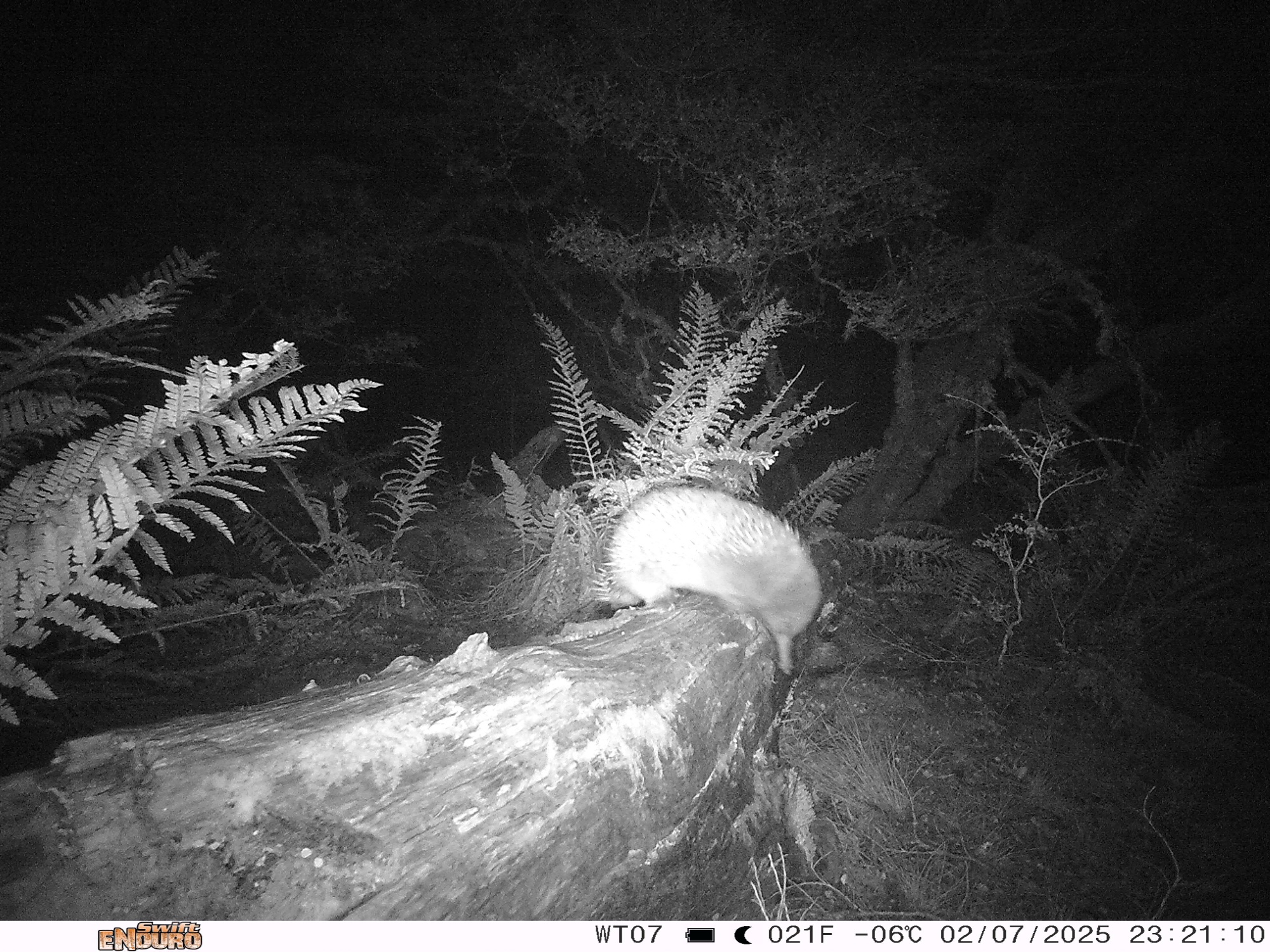
Tasmanian echidnas are more nocturnal than mainland echidnas and may be captured both day and night, but are less likely to be recorded between February and July when they are typically hibernating. Cats and many native marsupials are most active in the morning and evening (crepuscular). Most birds are active during the day (diurnal), with the exception of owls, frogmouths and nightjars, which are nocturnal. Devils and quolls are primarily nocturnal, although they may occasionally be active during the day. They are also more likely to be recorded (and sometimes in unusual places) during their dispersal season in late spring to summer, when young, inexperienced animals are searching for a new home.
What posture is the animal in?
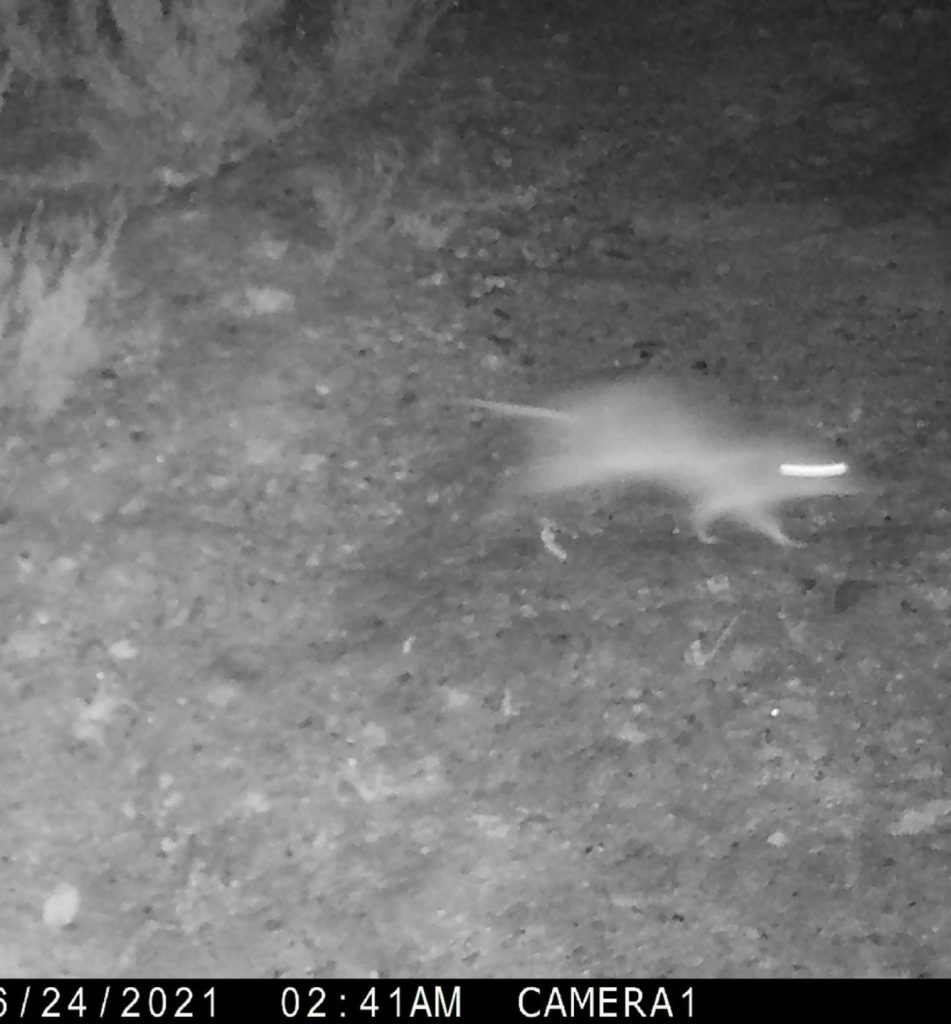
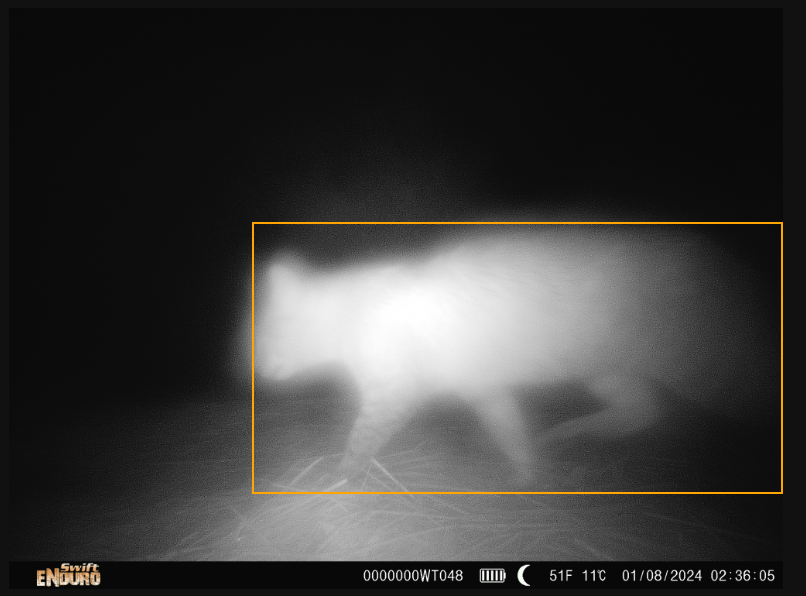
Even in still images, posture can tell you a lot about how an animal moves and provide important clues for ID. Bettongs hop on their oversized hind legs, with a forward-leaning “drag car” posture and tiny T.rex-like forelimbs tucked in. Potoroos may bounce upright on two legs like a kangaroo, or travel on all fours more like a bandicoot. Spotted-tailed quolls, devils and brown hares sometimes stand up to get a better view of their surroundings. Even when animals move past the camera too fast and appear as a blur, the shape of that blur can be useful – the arch of a bandicoot’s back or upwardcurve of a devil’s tail can give them away.
Is it one individual of a larger group?
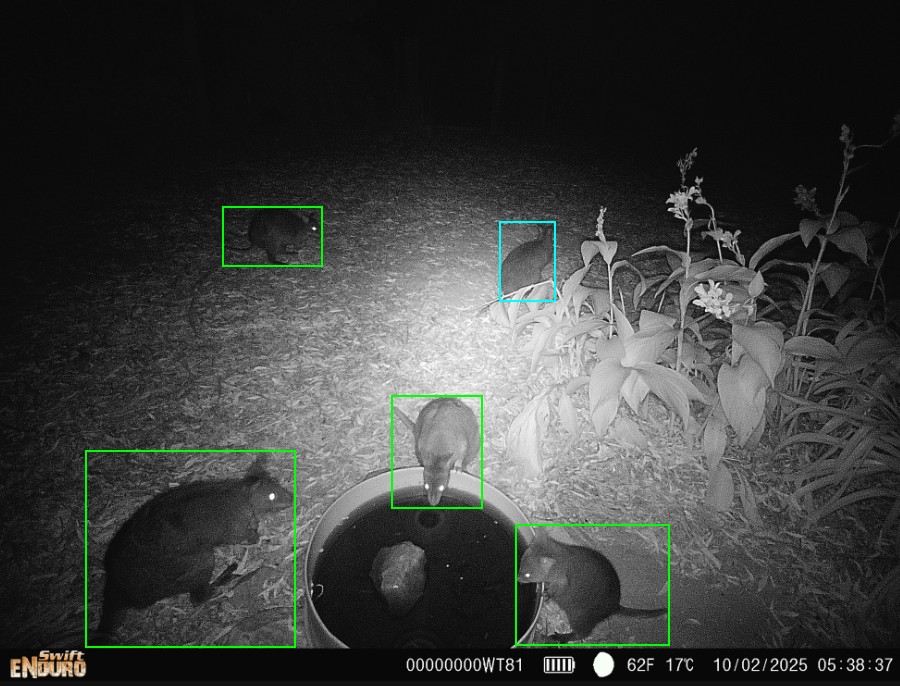
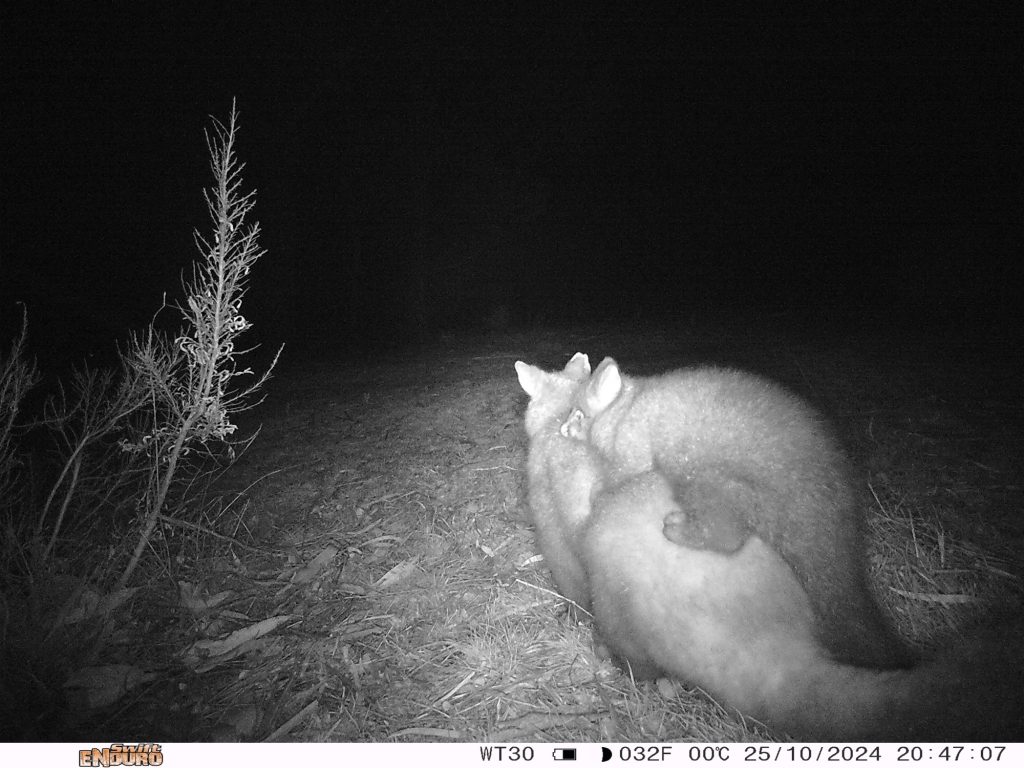
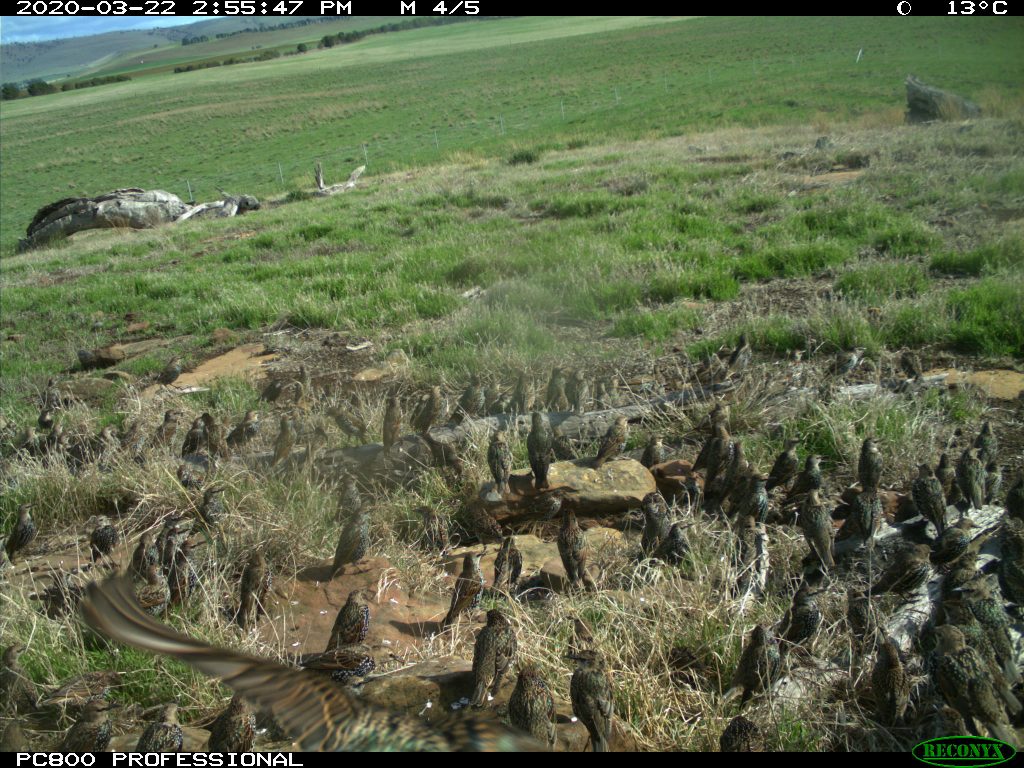
Some species are more likely to appear together than others. Pademelons are often seen in small groups, while wallabies tend to be more solitary. Many bird species can also be identified by how many appear together. For example, common starlings often occur in large flocks, robins may gather in loose groups over winter, and fairy-wrens typically live in small family groups. Many photos of wallabies, wombats, pademelons and possums will also include young, either in the pouch, at foot, or clinging to their mother’s back. We’d like you to tag each individual in a photo on WildTracker, though not all animals will be successfully detected by Stickybeak, especially if they are partially hidden inside a pouch.
These questions, along with any suggestions that Stickybeak might offer, can help narrow down which creature you may be looking at.
Something that us humans have over artificial intelligence (so far…) is the ability to take into context the photos before and after an observation record. If in a burst of 3-photos, #1 is of an adorable eastern bettong, #2 is a super blurry flash of grey, and #3 is of a bettong still being adorable, then it is quite likely that second photo was of the same bettong mid-bounce. Use your judgement in how you assign a tag in WildTracker. Remember that Stickybeak will sometimes get it wrong as it doesn’t know the context of photos and has no sense of an animal’s size.
Unsure
Even the most experienced camera-trapper can be stumped by a blurry photo or an unhelpful angle of a fluffy-bum. Animals might zoom past, leaving a ghostly blur, or be too far from the camera such that only their eye-shine is visible. Stickybeak also often assigns the ‘unknown’ tag when an animal is too close to the camera for clear identification.
If Stickybeak and this guide can’t help identify the species in your image, simply select the Unsure tag or Ask an expert using the WildTracker classifier. If you know it is a small mammal, but don’t know which species, use Unsure – small mammal. Similarly, for birds use Bird – unsure. Flagged photos will be periodically reviewed by ecologists from the Tasmanian Land Conservancy or skilled volunteers.
Start by browsing the images below and look for an animal of similar shape, size or colour. You can click any species to learn more or use the quick links to jump directly if you already know.
Naming Conventions
In this guide, we may present several names for a single species. First, the common name will be given for the animal as it is known in Tasmania (as opposed to mainland Australia). Second, the Latin or scientific name for the species will be given in italics. Then, with thanks to the Tasmanian Aboriginal Centre, we provide some animal names in palawa kani, the language of the Tasmanian Aborigines.